


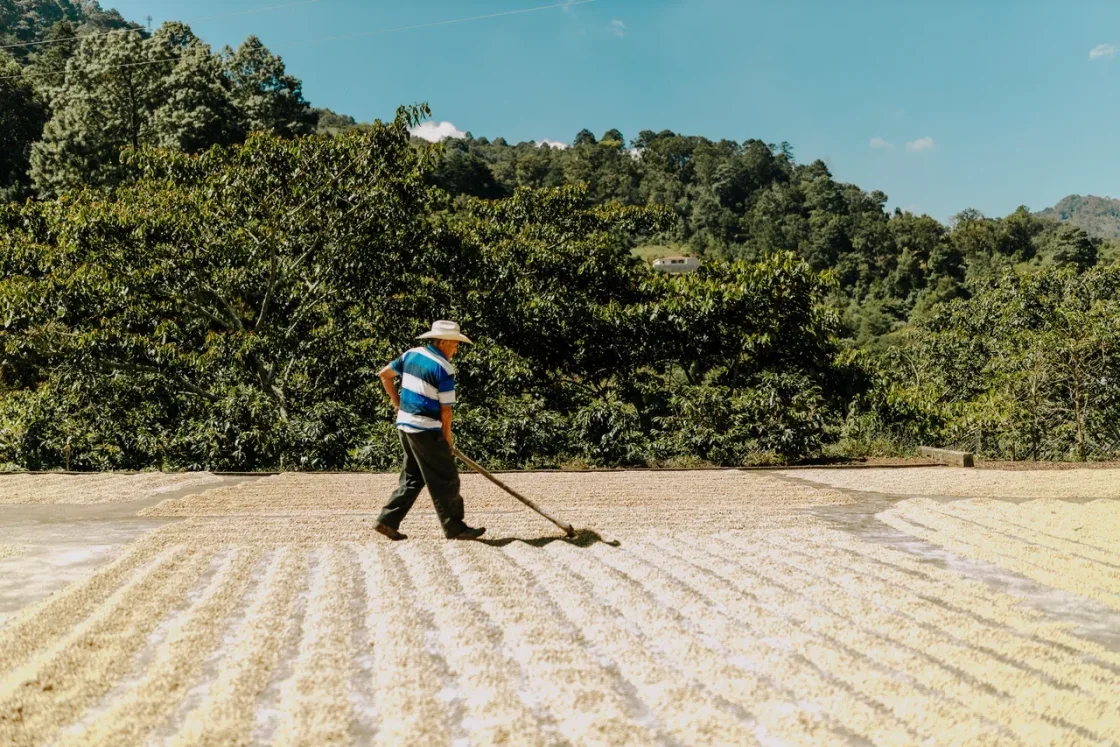
Over the past year, global coffee exchange prices have more than doubled, reaching new historical maximums, even though they were slightly adjusted in March 2025, Arabica prices are exactly twice as high as they were in April 2024, and we have decided to look in more detail at the factors behind this show - read our analysis of the reasons for the increase in coffee prices in the global market.
The article is informative, we are not responsible for the decisions you have taken since it was read:)
Part One: Coffee production in countries of origin
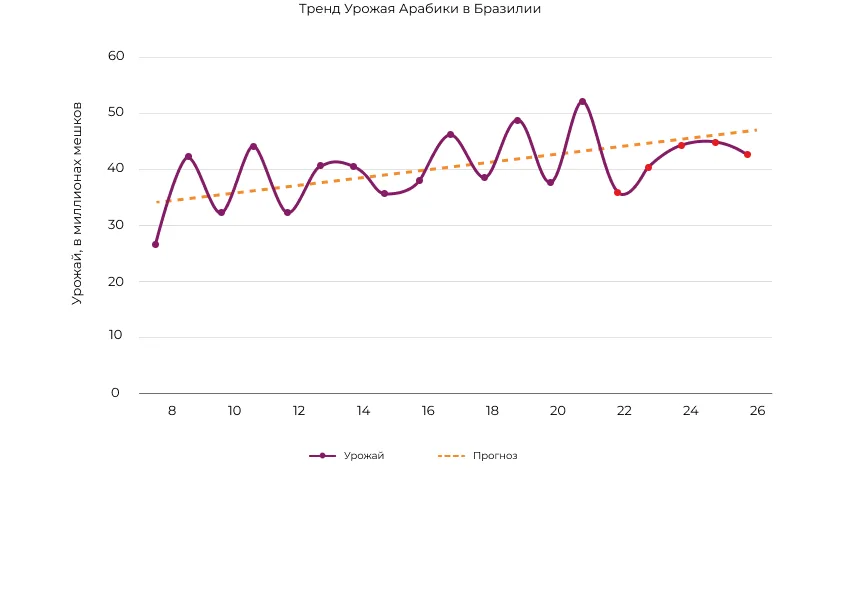
The first factor affecting the current situation in the coffee market is the problem of coffee production in Brazil, which has not reached potential levels over the past five years, and has been below projections.
The 20/21 record harvest with some 52 million bags of Araba has been transferred to off-cycle 21/22 with 35 million bags of Arab origin, but the next on-cycle harvest of 22/23 only produced about 40 million bags, 23/24 to 43 million bags, 24/25 to 42 million bags, and the harvest of 25/26 is also projected at 41 to 42 million bags.
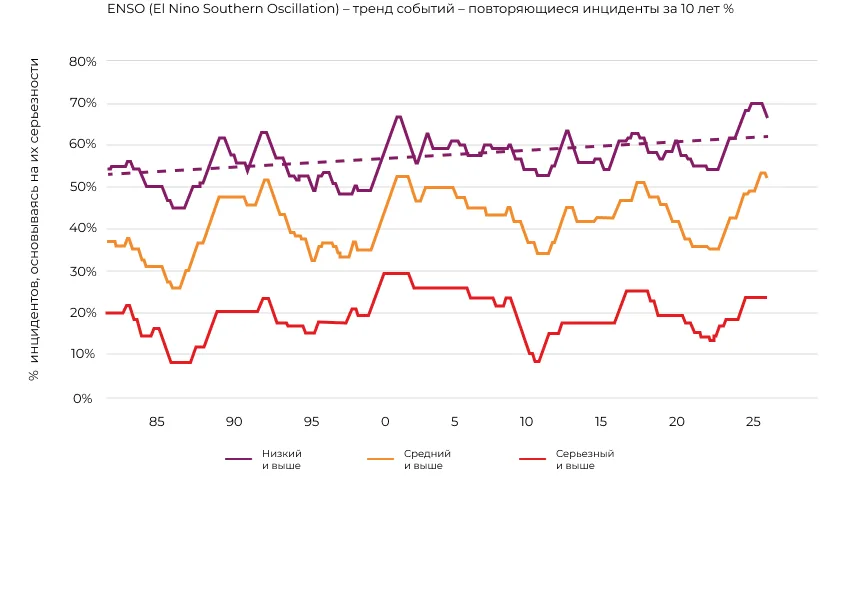
The second factor affecting price increases was the duration and intensity of El Niño and La Niña, which has led to a number of problems, and it is interesting to see the graph from January 1982 to January 2025, which shows the percentage of "weather incidents" based on their severity.
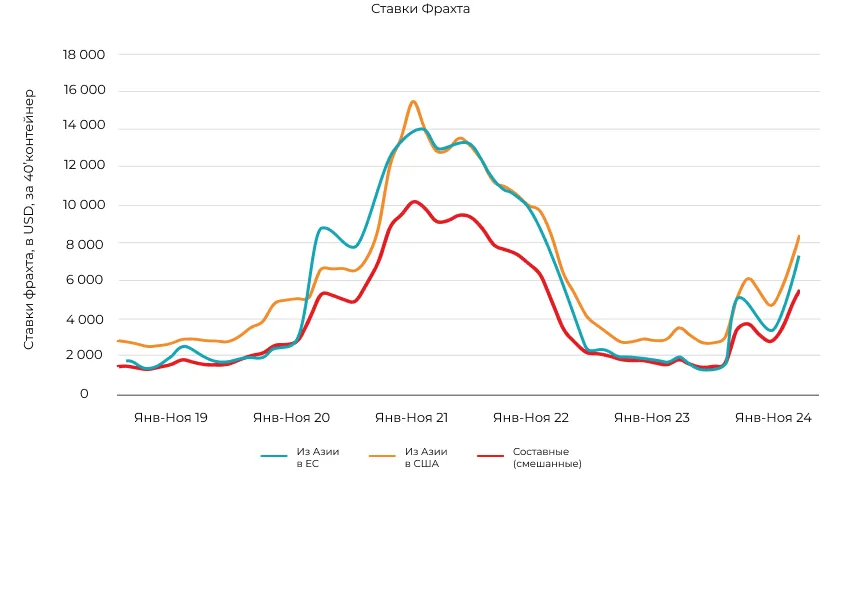
The third factor is logistics.
Many talk about logistics as one of the reasons for the increase in the cost of coffee, but it cannot be said that it recovered from COVID, the problem is that the "bottle throat" effect has become more frequent and freight rates have become more volatile.
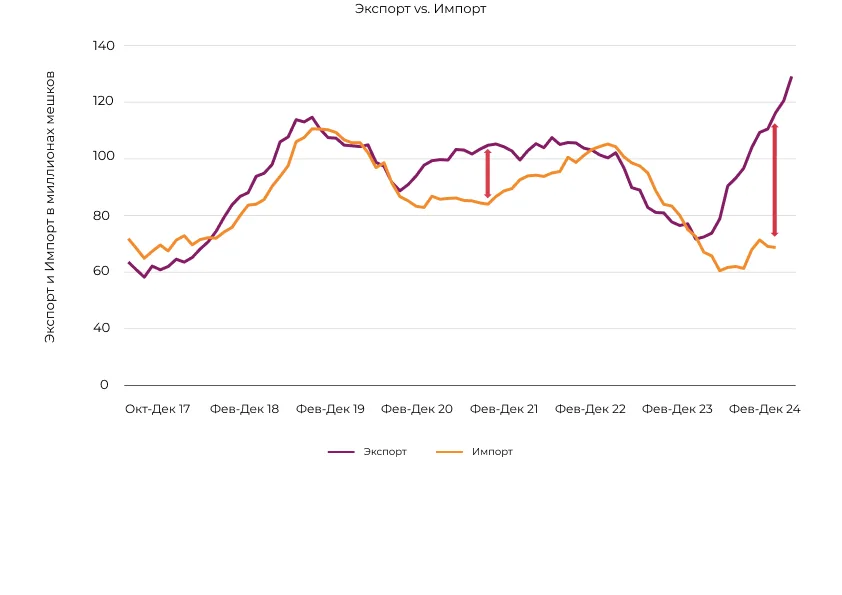
The next interesting schedule is a correlation between exports and imports, but despite a relatively high export rate (the coffee is shipped out in large quantities), it does not reach the destination in time.
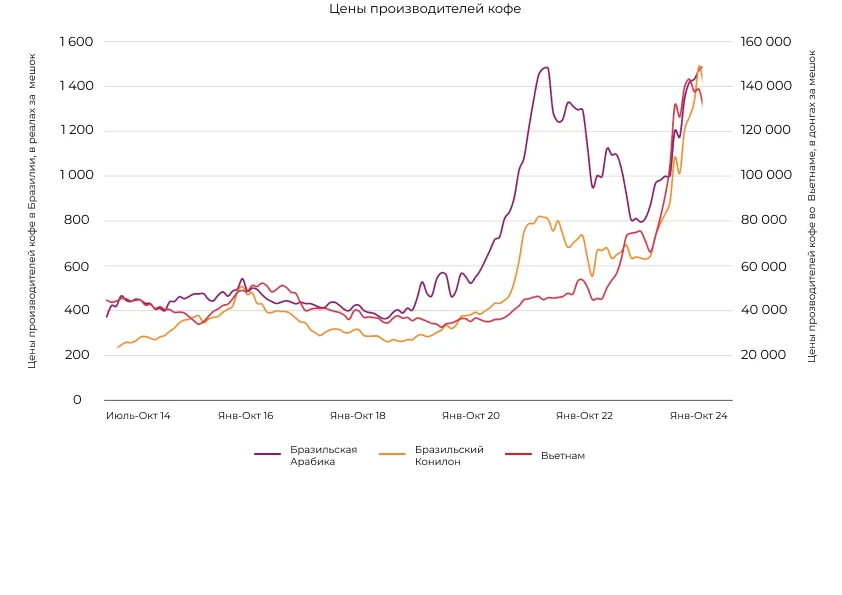
The fourth factor is the current average price of coffee from producers, which is one of the highest in history.
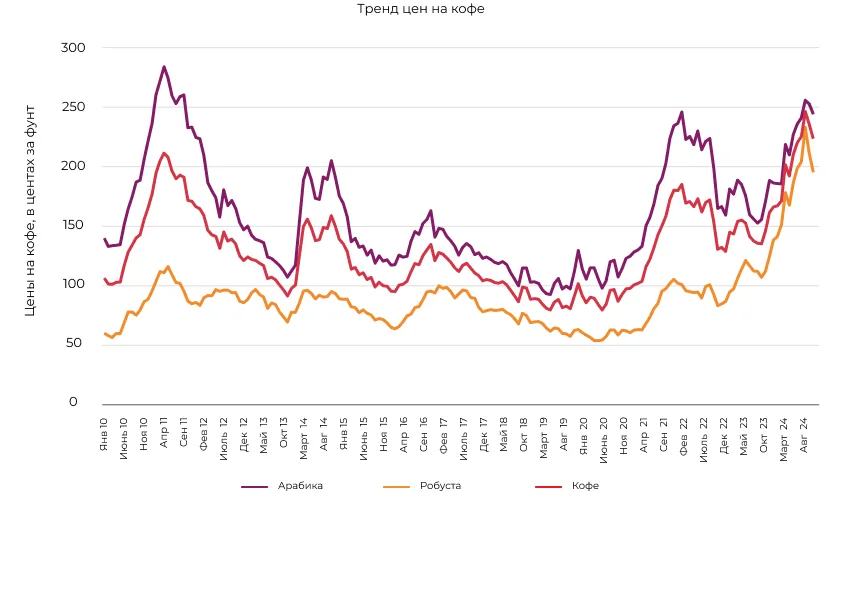
The significant increase in coffee prices is reflected in the July 2014 to January 2025 price graph.
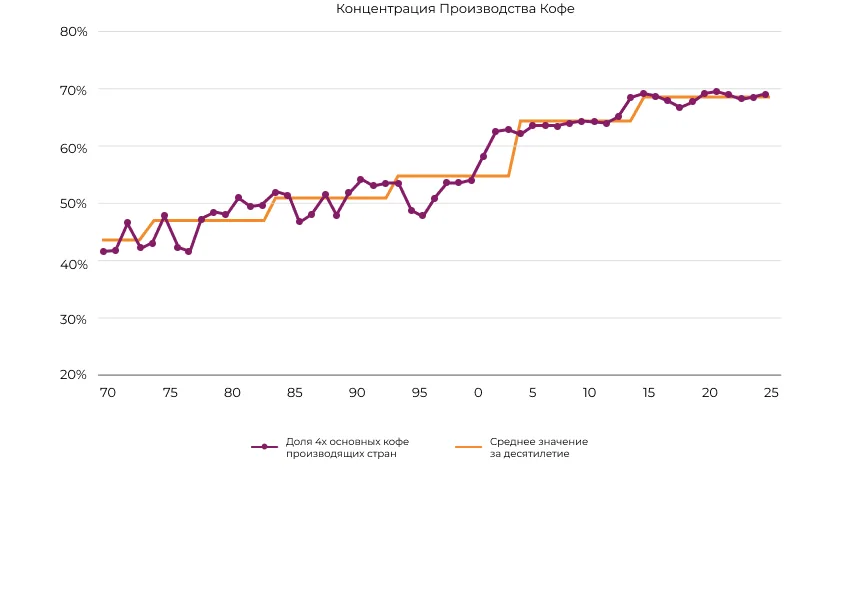
The fifth factor is "concentration risk." Between 1970 and 2025, the share of the four largest coffee producing countries rose from about 40 per cent to almost 70 per cent.
This concentration greatly increases the risk of a decline in weather-related production, such as the sharp price increase caused by the freezing of Brazil a few years ago, or the drought in 2024.
In summary:
— The frequency and severity of "weather incidents" increases uncertainty associated with crop forecasts;
• Logistics problems disrupt the smoothness and size of the supply to countries where coffee is consumed;
- Current record prices should lead to record future harvests (if excellent/correct weather exists);
— but increased concentration risk has a strong climate/weather effect — something to be addressed.
Part Two: Demand
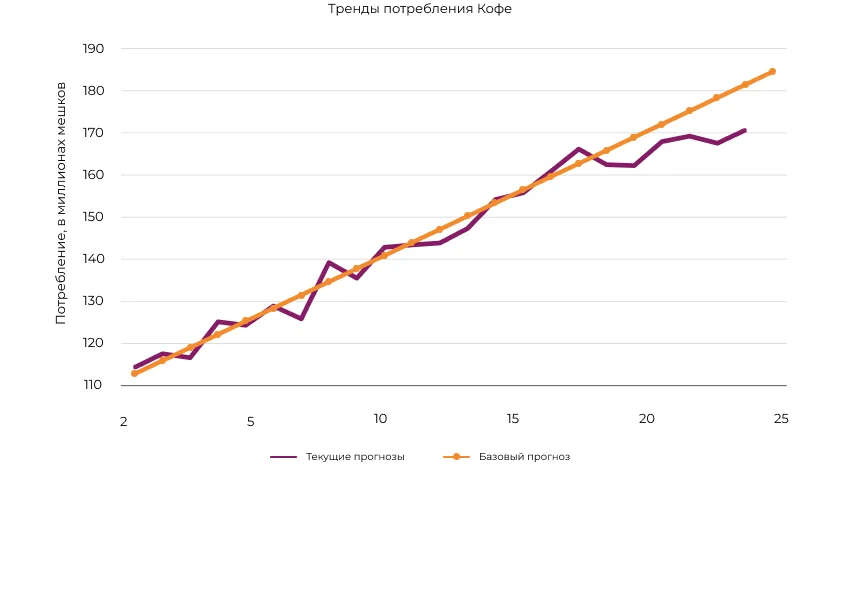
It will be interesting to note the schedule (trend) for coffee consumption from 2002/2003 to 2025/2026, which reflects the fact that global coffee consumption has increased from 112-115 to 170 million bags per year over a period of 20 years. However, starting with COVID, the coffee consumption curve is below the projected level. Demand has "adjusted", but it is below the coffee consumption trend line, remaining at about 170 million bags.
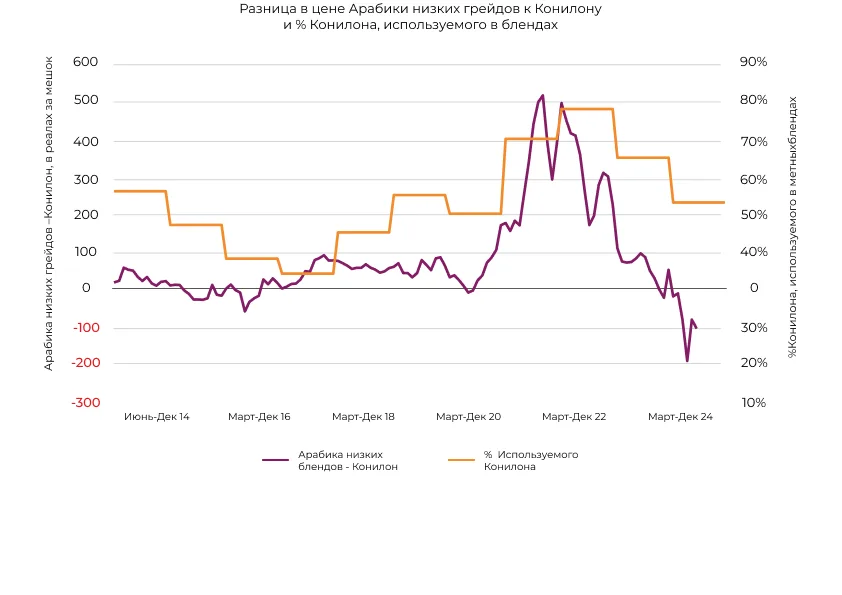
The following is a schedule for coffee consumption within countries of origin: here is a comparison of Brazil ' s domestic market ' s flexibility in the use of blends and the gradual replacement of the coffee lode grade Conylon and a decrease in the price difference between them between June 2014 and December 2024.
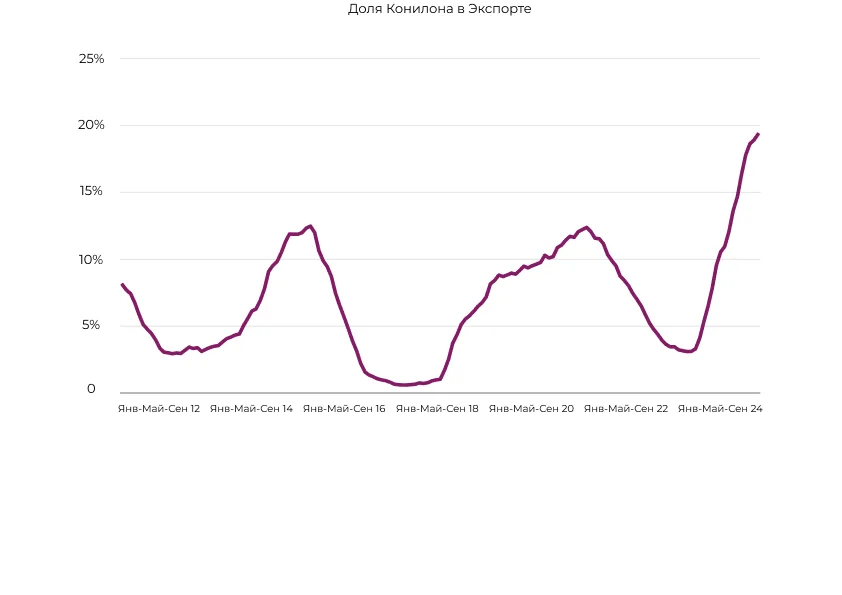
We also note that Conylon's share of Brazilian coffee exports has increased, with 2024 figures showing growth to nearly 20 per cent between January 2012 and September, and that there is no magic — the past four years in Viet Nam have been declining in coffee production on a number of factors — the conillon has been a natural substitute for the Vietnamese robbut.
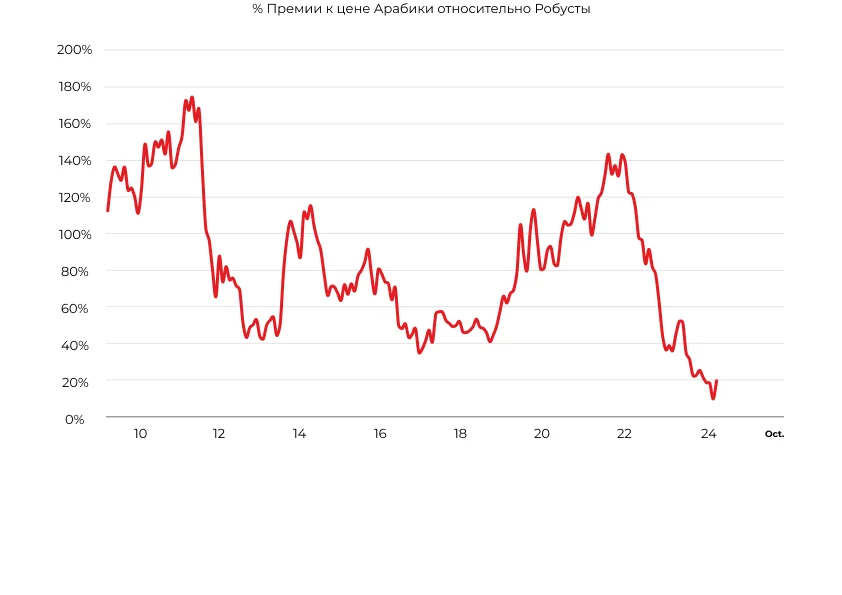
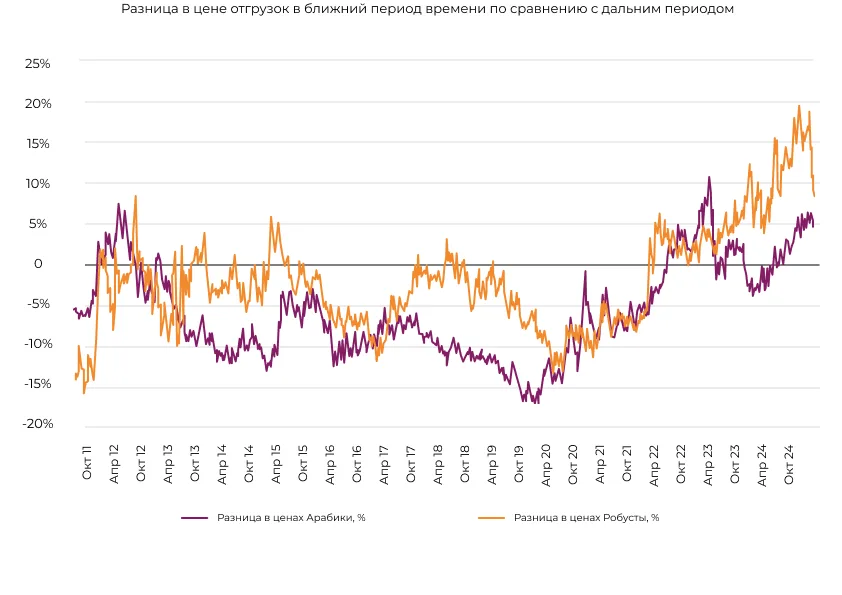
In addition, in the current reality, almost all coffee competes at price only, and the graph on the left shows the difference between the price of the Arab and the robusta from October 2009 to October 2024.
Coffee prices are now at historical maximums for the entire observation period, but it is important to clarify that if you look at the peaks of the last century (the 1950s and 1970s), inflation-based prices are 11 dollars per pound in our time, so it is obvious that coffee prices are always in the right place to grow.
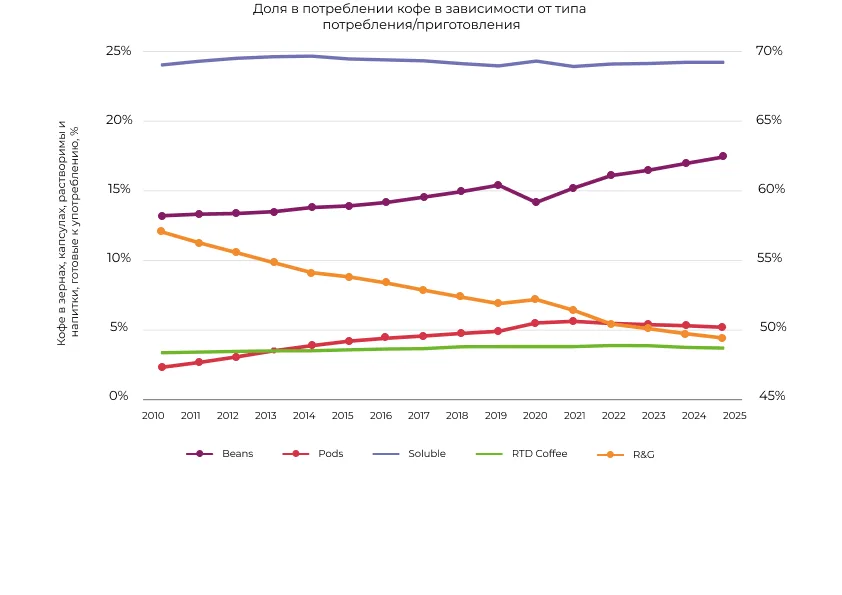
And the last factor is the variety of coffee formats offered, which covers demand growth. Here is the graph of the proportion of grain coffee, capsules, soluble and "pre-supplied" and "fried and tar" coffee between 2010 and 2025. We will see an increase in the share of the first and a decrease in the share of the second.
In short summary:
- after COVID, demand for coffee is still slowly growing, primarily due to high grain prices
- The blends/mixes have become easier to change and the conillon finds its way into them in an increasing number of countries
– The consumer pays more attention to coffee prices than to characteristics such as the taste profile of the cup, variety, etc.
- "Use efficiency" (various product formats) affects demand
Part three, inventory.
The high cost and high cost of raw materials have forced the industry to reduce its stock despite the uncertainty of the supply of coffee, and the volatility of timely coffee supplies has led to a further decline in the stocks of consuming countries to very low levels, while the fuel-burning companies will have a low supply of coffee in the face of high demand.
According to the full stock of certified coffee, the demand of the roasters to ship coffee from warehouses in the countries of consumption is hampered by the sampling of certified coffee despite low differential rates.
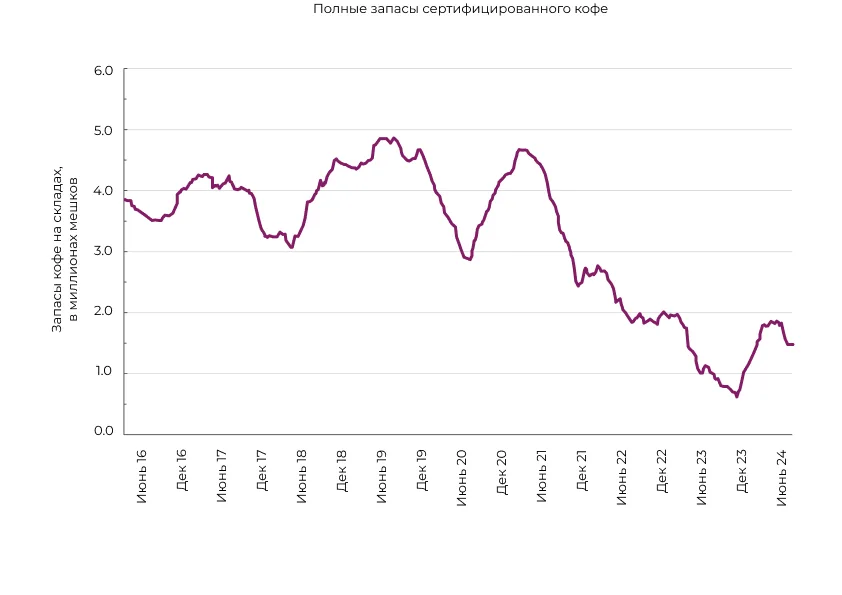
The graph reflects the fact that demand for coffee for shipments from warehouses in the countries of consumption and the low availability of certified coffee continues to support the "inverted" market.
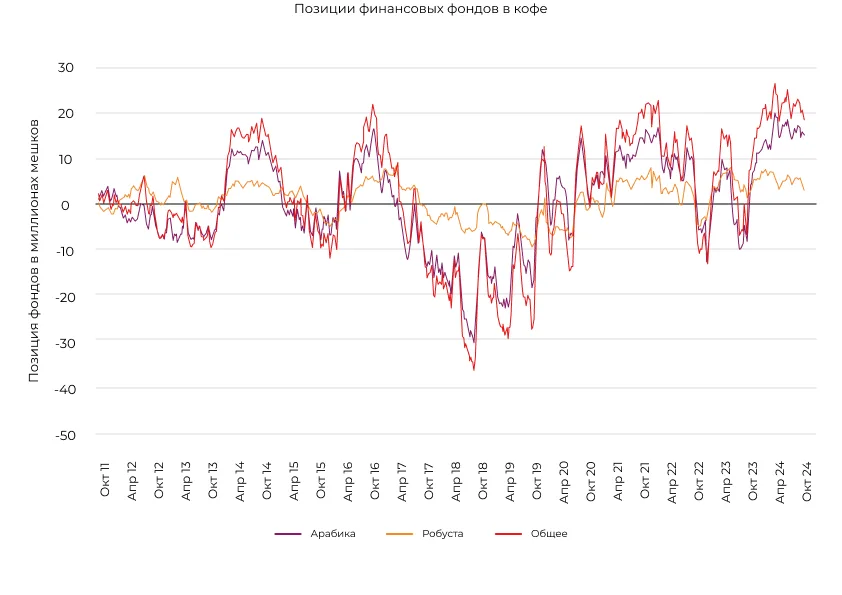
The "Foundation in Coffee" graph shows that a large delta in distribution attracts investment funds to keep long positions in coffee.
Conclusions:
- Low certified coffee reserves maintain a high level of spread (the immediate supply unit compared to the long-term supply);
- Investment funds hold quite a large number of long coffee positions, which is linked to a good return from the "inverted" market.
EUDR (European Food Countries Conservation Act). The delay in implementing this legislation has led to the need for the accumulation of coffee in accordance with this Act (coffee must be grown on land where no forests existed before 2019, i.e. forests have not been deliberately cut off after 2020 to increase the size of coffee plantations, which must be proven, including satellite imagery).
- The regulatory restrictions associated with other "relevant coffee" (e.g. organic or RFA) as well as other organics (tariffs) can affect the market, and this is something to be closely observed.
The current fundamentals in the coffee business require a new approach to analysis:
Question:
Why are prices now higher than they should be based on the current supply-demand balance?
Answer:
1) since the balance of demand and supply in countries consuming coffee has become more narrow than ever before, which is not reflected in global demand and supply
(2) Logistics issues separated demand in countries with coffee consumption from global supply and demand balance
Question:
Why is arbitration very narrow in the value of current supplies and terminal levels?
Answer:
(1) Coffee prices became a key point for roasters companies, with the highest rates of coffee varieties, their taste profiles and other features
(2) All coffee competes for the share of the roasters only at the price and efficiency of the processing (combustion and subsequent steps).
Question:
Why is the supply of certified coffee not growing despite low differential?
Answer:
1) All supply chains are now forced to work with high margins, because of high capital costs.
(2) While procurement differential remains low, sales differential is not profitable enough to attract a large amount of coffee into the graying rooms.
We are now in a circle:
1) High interest rates, logistical problems, lack of capital, high cost of supply services
They shall be:
(2) Very narrow supply and demand balance in warehouses in the countries of consumption; high margins in the supply chain to cover costs and capital costs; very small stocks of roasters
Which in turn leads to:
3) High exchange prices; "inverted market"/high spread between immediate and long-term shipments; investment funds buying "long" positions; certified stocks not meeting needs. What brings us back to the first point is the circle is closed.
Conclusions:
First, the impact on coffee prices will remain marginal because of a neutral balance that looks stable.
The second conclusion is that external macroeconomic shocks from interest rate (downs) revisions, improved logistics, risk reduction/recession, and so on, have the potential to break the current cycle.